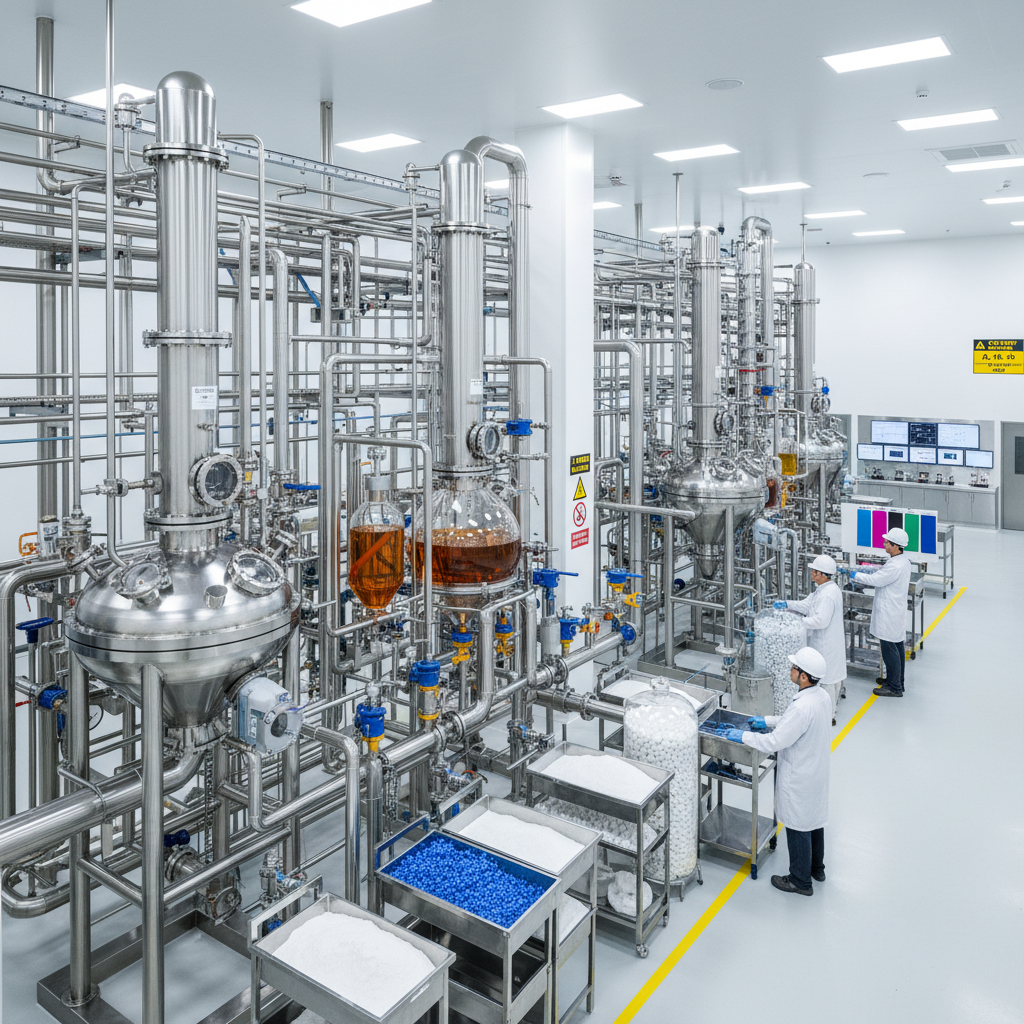
Industrial cooling systems rely heavily on precision chemistry to maintain thermal efficiency and structural integrity. The search for reliable cooling tower chemical suppliers often focuses on finding partners who can provide high-purity additives that prevent scaling, corrosion, and biological growth. This guide examines the technical requirements for these chemical interventions and how they integrate into large-scale industrial heat exchange processes.
Maintaining a cooling system requires more than just adding chemicals; it involves a deep understanding of water chemistry and material compatibility. From the application of polymer conversion monomers to the use of specialized emulsifiers, the choice of chemical agent directly affects the operational lifecycle of the equipment. For B2B procurement officers, distinguishing between generic suppliers and specialized chemical manufacturers is critical for ensuring long-term system stability.
Readers will explore the specific technical characteristics of water treatment additives, including the role of Sodium Cumenesulfonate as an emulsification agent. By analyzing selection criteria and performance factors, this article provides a framework for evaluating the technical capacity of a provider to meet rigorous industrial specifications, ensuring that the chosen chemical regime optimizes both cost and performance.
Technical Fundamentals of Cooling Water Treatment
Cooling towers operate by evaporating a small portion of water to cool the remainder, a process that naturally concentrates dissolved minerals and impurities. This concentration leads to several technical challenges: mineral scaling, where calcium and magnesium salts precipitate on heat exchange surfaces; galvanic corrosion, where dissolved oxygen and salts attack metal piping; and biofilm accumulation, which creates an insulating layer that reduces heat transfer. To counteract these, cooling tower chemical suppliers provide a suite of inhibitors and dispersants. The goal is to maintain a chemical equilibrium that prevents the transition of dissolved solids into solid deposits. Advanced chemical regimes now integrate multi-functional polymers that act both as scale inhibitors and corrosion blockers, reducing the total volume of chemicals required while increasing the "cycles of concentration" the system can handle before a blowdown is necessary.
Strategic Evaluation for Chemical Procurement
Selecting a chemical partner requires a transition from looking at "price per drum" to "total cost of ownership." The purity of the active ingredient and the stability of the formulation determine how often the system must be treated and the likelihood of unplanned downtime. The following sections analyze the core dimensions of technical and commercial evaluation for industrial water treatment chemistry.
Selection Criteria for Chemical Agents
When evaluating treatment chemicals, buyers must prioritize purity specifications and pH adaptability. For instance, the effectiveness of a dispersant often depends on its ability to remain stable across a range of alkalinity levels. Procurement teams should request detailed Technical Data Sheets (TDS) to verify the active concentration and the presence of any impurities that could trigger unexpected precipitation.
| Evaluation Factor | Technical Requirement | Operational Risk | Buyer Question |
|---|---|---|---|
| Chemical Purity | High active concentration (e.g., 40% or 93%) | Inconsistent dosing results | What is the guaranteed purity assay? |
| pH Stability | Adaptability to varying alkalinity | Chemical precipitation in lines | At what pH does the agent degrade? |
| Metal Compatibility | Non-reactive with copper/steel | Accelerated pitting corrosion | Is this compatible with galvanized steel? |
| Solubility | Rapid dissolution in cold water | Clogging of dosing pumps | Does it require pre-heating to dissolve? |
| Biodegradability | Low environmental toxicity | Compliance penalties | Is the product REACH or EPA compliant? |
| Storage Life | Stability over 12-24 months | Loss of active potency | What is the shelf life under standard storage? |
Impact of Water Chemistry on Efficiency
The effectiveness of any treatment is bound by the source water quality. High hardness water requires a higher concentration of scale inhibitors to prevent the formation of calcium carbonate. In such environments, the synergy between different chemical agents becomes paramount. A failure to match the chemical regime to the specific water mineralogy can lead to "under-treatment," resulting in rapid fouling of the fill media and a significant drop in the cooling tower's approach temperature.
Role of Emulsification Additives
In specific industrial processes, the use of emulsification additives is essential for maintaining a homogenous mixture of organic and inorganic components. Sodium Cumenesulfonate (C9H11NaO3S) serves as a critical polymer conversion monomer and emulsification additive. Its ability to provide mechanical stability and pH adaptability makes it suitable for lotion polymerization (such as styrene and butadiene). In a cooling context, such additives can help manage the dispersion of oily contaminants that would otherwise shield biofilms from biocides.
Scale Inhibition Mechanisms
Scale inhibitors work primarily through two mechanisms: threshold inhibition and crystal modification. Threshold inhibitors prevent the initial nucleation of crystals, while crystal modifiers distort the growth pattern of the scale, preventing it from adhering to the metal surfaces. The choice between phosphonates, polyacrylates, or specialized sulfonates depends on the specific types of salts present in the system water.
Corrosion Control Strategies
Corrosion control involves creating a microscopic protective film on the interior of the pipes. This is achieved using anodic or cathodic inhibitors. A common mistake in procurement is choosing a corrosion inhibitor that is incompatible with the scale inhibitor, which can lead to the formation of a complex that actually promotes deposition. Ensuring a compatible chemical "cocktail" is the responsibility of the technical team at the manufacturing plant.
Environmental Compliance Standards
Modern industrial operations are under strict mandates to reduce the phosphate and nitrogen content of their blowdown water. This has led to a shift toward "green" chemistry, utilizing biodegradable polymers. Buyers should verify that their suppliers are moving toward sustainable production methods and providing chemicals that meet local environmental discharge regulations without sacrificing technical performance.
Evaluating Manufacturing Capabilities
A reliable partner is defined by their production infrastructure and quality control. For instance, Shijiazhuang Kunxiangda Technology Co., Ltd. leverages a 50-acre facility with a dedicated technical staff and collaborations with institutions like Tsinghua University. Such partnerships allow for the optimization of production technology and the reduction of impurities in pharmaceutical and dye intermediates, which translates to higher consistency in the chemical raw materials supplied to the global market.
FAQ
What is the primary purpose of using chemical additives in cooling towers?
The primary purpose is to prevent the degradation of the system through the control of scale, corrosion, and biological growth. By using inhibitors and biocides, these additives ensure that heat transfer efficiency remains high and the equipment's operational lifespan is extended, reducing the need for frequent mechanical cleaning and expensive part replacements.
How does Sodium Cumenesulfonate function as a chemical additive?
Sodium Cumenesulfonate acts as a polymer conversion monomer and an emulsification additive. In industrial applications, it provides mechanical stability and pH adaptability, making it particularly useful in the polymerization of sulfoethyl lotions, including styrene and butadiene. It helps in stabilizing emulsions, which is critical for various chemical synthesis and pharmaceutical intermediate processes.
What should I look for when evaluating a chemical supplier's technical capacity?
Buyers should examine the supplier's R&D partnerships, facility scale, and quality control certifications. A supplier with a dedicated technical team and academic collaborations—such as those with recognized universities—is more likely to provide consistent product purity and offer technical support for customizing formulations to specific water chemistry needs.
Can different scale inhibitors be mixed in the same system?
Mixing inhibitors without technical validation is risky. Some chemicals can react to form insoluble precipitates, which can actually increase scaling or clog the system. It is essential to consult the Technical Data Sheet (TDS) and the manufacturer's compatibility chart before introducing a new agent into an existing chemical regime.
What are the signs that a cooling tower's chemical treatment is failing?
Common signs include an increase in the "approach temperature" (the difference between the cold water temperature and the ambient wet-bulb temperature), visible white mineral deposits on the fill media, a rise in corrosion byproduct levels in the water, and the appearance of slime or algae in the basin.
How does purity affect the cost-effectiveness of industrial chemicals?
Higher purity reduces the amount of "dead weight" in the chemical dosing, meaning less total product is required to achieve the target concentration. Furthermore, high-purity agents reduce the risk of introducing foreign ions or organic impurities that could destabilize the water chemistry or lead to unexpected side reactions in the system.
References and further reading
- Industrial Water Treatment Handbook: Principles of Scale and Corrosion Inhibition.
- Cooling Tower Institute (CTI) Standards for Water Treatment and System Maintenance.
- Polymer Science and Emulsification: The Role of Sulfonated Monomers in Industrial Synthesis.
Related Articles