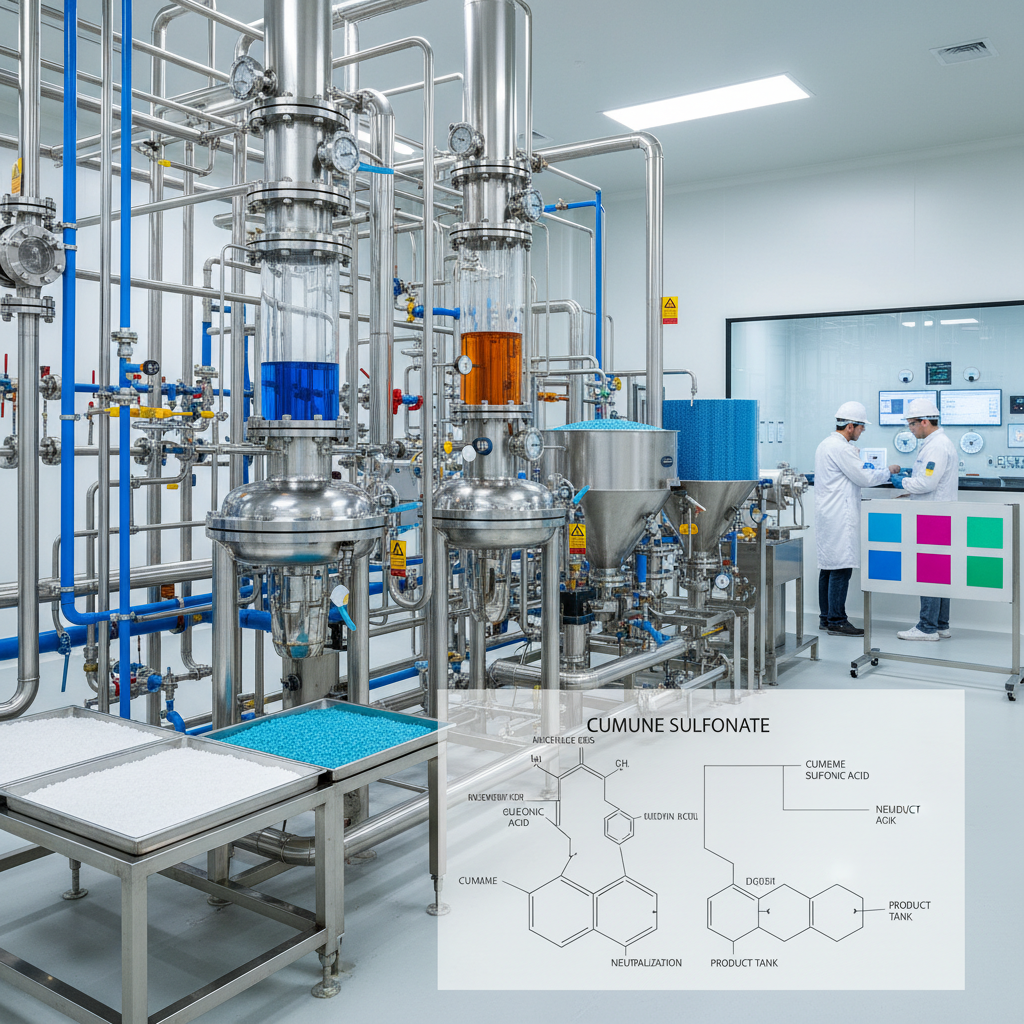
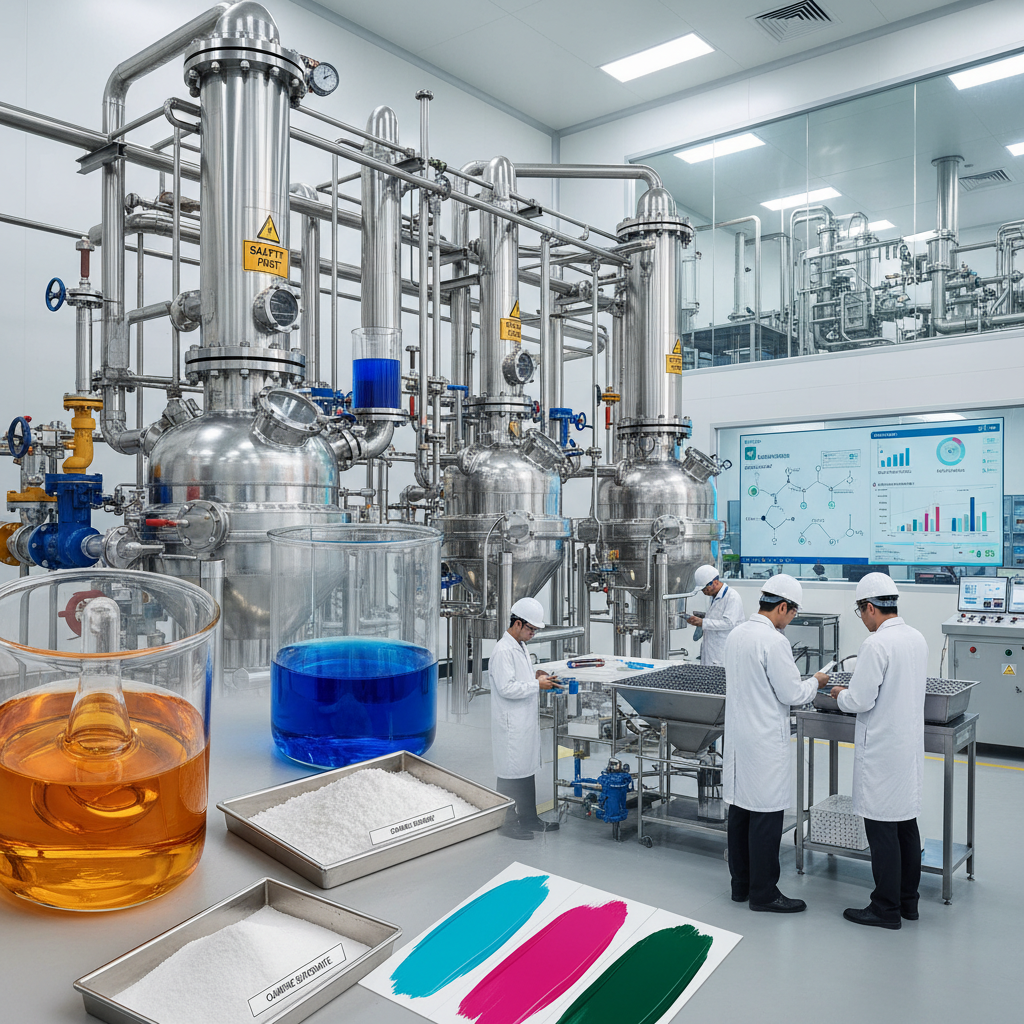
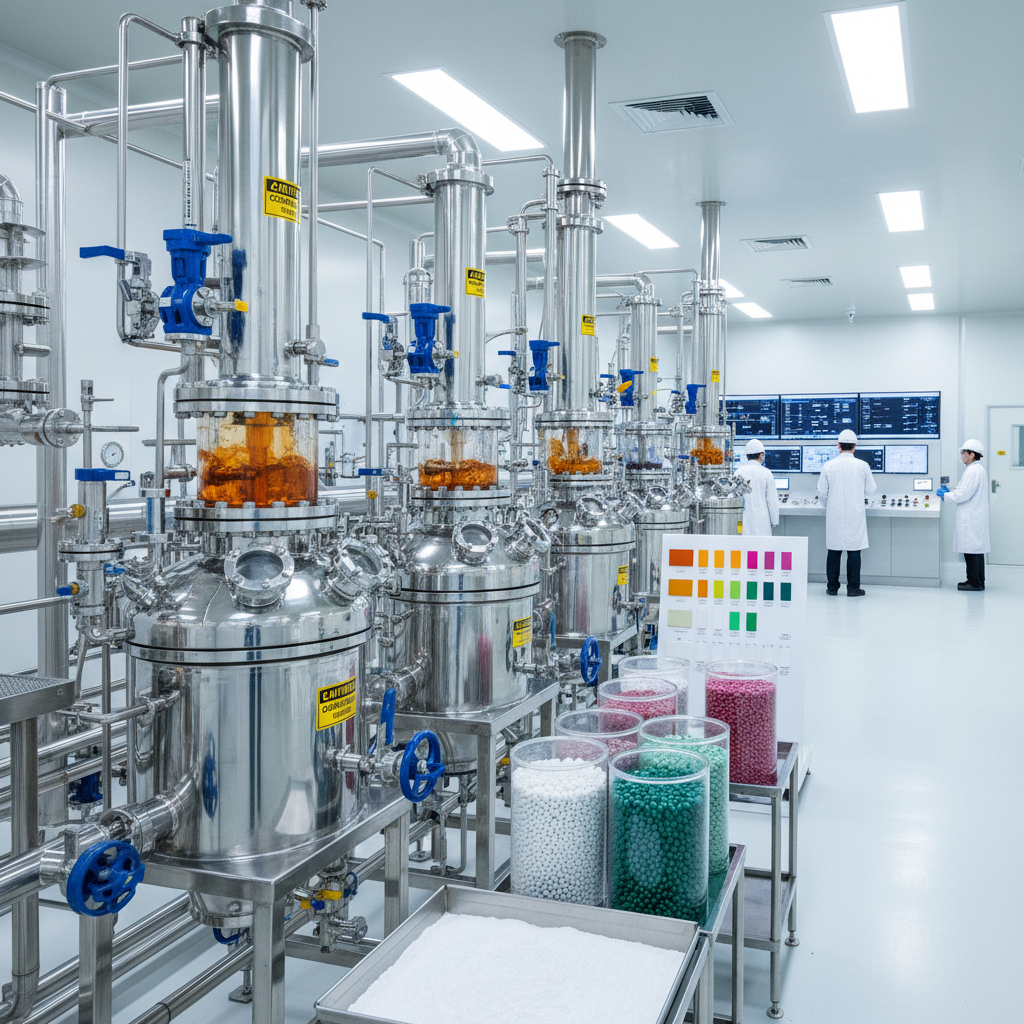
Cumene sulfonate, a versatile organic compound, plays a crucial role in numerous industrial processes, particularly within the pharmaceutical and chemical manufacturing sectors. Its applications range from acting as an intermediate in drug synthesis to serving as a catalyst in various chemical reactions. Understanding its properties and functionalities is paramount for optimizing production efficiency and ensuring product quality in these vital industries.
Globally, the demand for high-purity chemical intermediates like cumene sulfonate is steadily increasing, driven by the expanding pharmaceutical industry and the growing need for specialized chemical products. This demand necessitates stringent quality control measures and sustainable production practices. Manufacturers are increasingly focused on developing greener and more efficient synthesis routes for cumene sulfonate to minimize environmental impact and reduce production costs.
The significance of cumene sulfonate extends beyond its immediate industrial applications. It contributes to advancements in medical treatments, materials science, and various other fields, making it a foundational component of modern innovation. As research continues, we can anticipate even broader applications for this key chemical building block.
Understanding the Chemical Foundation of cumene sulfonate
Cumene sulfonate, at its core, is an aromatic sulfonic acid derived from cumene. Its chemical structure grants it unique properties, including strong acidity and solubility in both water and organic solvents. This dual solubility is a key factor in its widespread use as a phase transfer catalyst and a reagent in organic synthesis.
The synthesis of cumene sulfonate typically involves the sulfonation of cumene, often using sulfuric acid or sulfur trioxide. Careful control of reaction conditions – temperature, reactant ratios, and mixing – is critical to achieving high yields and purity. Variations in the synthesis process can lead to different isomeric forms, influencing its reactivity and application.
The Global Landscape of cumene sulfonate Production and Consumption
The production of cumene sulfonate is concentrated in regions with established chemical manufacturing infrastructure, primarily in Asia (China, India), Europe, and North America. China currently dominates the global market share, driven by its robust chemical industry and competitive production costs. Demand is influenced by growth in the pharmaceutical, agrochemical, and specialty chemical sectors.
Global consumption is steadily increasing, fueled by the expanding pharmaceutical industry, particularly the demand for active pharmaceutical ingredients (APIs) and pharmaceutical intermediates. Stringent regulatory requirements regarding product purity and safety are driving the demand for high-quality cumene sulfonate from reputable manufacturers.
Supply chain disruptions, geopolitical factors, and environmental regulations can significantly impact the availability and pricing of cumene sulfonate. Manufacturers are increasingly adopting strategies to diversify their sourcing and build resilient supply chains to mitigate these risks.
Defining cumene sulfonate: Structure, Properties, and Synthesis
Cumene sulfonate, with the chemical formula C9H12SO3, is a sulfonic acid characterized by a benzene ring substituted with both a cumene group (isopropylbenzene) and a sulfonic acid group (-SO3H). This structure imparts both hydrophobic and hydrophilic properties, making it effective in various applications.
Key physical properties include its appearance as a viscous liquid or crystalline solid, depending on its purity and isomeric composition. It’s soluble in water, alcohols, and other polar organic solvents. Its acidity makes it a strong proton donor, facilitating its role as a catalyst. The presence of the aromatic ring contributes to its stability and resistance to degradation.
The primary synthesis route involves the sulfonation of cumene, generally using concentrated sulfuric acid or sulfur trioxide. The reaction is exothermic and requires careful temperature control. Purification methods, such as crystallization or extraction, are employed to obtain high-purity cumene sulfonate suitable for pharmaceutical applications.
Key Characteristics Influencing cumene sulfonate Application
The acidity of cumene sulfonate is arguably its most defining characteristic, enabling its use as a strong acid catalyst in esterification, alkylation, and isomerization reactions. Its ability to protonate reactants significantly accelerates reaction rates.
Its amphiphilic nature – possessing both hydrophilic and hydrophobic properties – makes it an effective surfactant and phase transfer catalyst. This allows it to facilitate reactions between reactants in immiscible phases, improving efficiency and yields.
cumene sulfonate Performance Metrics
Diverse Applications of cumene sulfonate Across Industries
In the pharmaceutical industry, cumene sulfonate serves as a crucial intermediate in the synthesis of various APIs, particularly those requiring sulfonation reactions. It’s utilized in the production of certain antibiotics, anti-inflammatory drugs, and cardiovascular medications.
The chemical industry employs cumene sulfonate as a catalyst in various processes, including esterification, alkylation, and polymerization. Its strong acidity and ability to promote reaction rates make it a valuable component in industrial chemical synthesis.
The Advantages and Long-Term Value of Utilizing cumene sulfonate
Using cumene sulfonate often leads to increased reaction yields and reduced reaction times, translating into lower production costs and improved efficiency. Its catalytic activity minimizes the need for stoichiometric amounts of reagents, reducing waste generation.
The consistent quality and reliability of cumene sulfonate contribute to the production of high-purity products, essential in the pharmaceutical and fine chemical industries. Choosing a reputable supplier ensures adherence to stringent quality control standards and regulatory requirements.
Challenges in cumene sulfonate Production and Innovative Solutions
A key challenge is the potential for byproduct formation during synthesis, requiring efficient purification steps to achieve high-purity cumene sulfonate. The handling of corrosive reagents, such as sulfuric acid, poses safety and environmental concerns.
Innovative solutions include the development of greener synthesis routes utilizing alternative sulfonating agents and the implementation of closed-loop systems to minimize waste generation. Continuous flow reactors offer improved process control and reduced byproduct formation compared to batch processes.
Researchers are exploring the use of heterogeneous catalysts for sulfonation, aiming to replace traditional liquid acids with solid catalysts that are easier to separate and recycle, further enhancing sustainability.
Summary of Challenges and Solutions in cumene sulfonate Production
| Challenge Area |
Specific Problem |
Impact on Production |
Potential Solution |
| Synthesis Byproducts |
Formation of unwanted isomers and impurities |
Reduced product purity, increased purification costs |
Optimized reaction conditions, selective catalysts |
| Corrosive Reagents |
Use of sulfuric acid and sulfur trioxide |
Safety hazards, equipment corrosion, environmental concerns |
Alternative sulfonating agents, closed-loop systems |
| Waste Generation |
Disposal of spent acids and byproducts |
Environmental pollution, increased waste management costs |
Waste minimization strategies, byproduct recovery |
| Process Control |
Maintaining optimal reaction conditions |
Batch-to-batch variability, inconsistent product quality |
Continuous flow reactors, automated control systems |
| Catalyst Recovery |
Separating and reusing catalysts |
Costly catalyst loss, environmental impact |
Heterogeneous catalysts, membrane filtration |
| Supply Chain Resilience |
Dependence on single suppliers |
Disruptions due to geopolitical factors or natural disasters |
Diversified sourcing, strategic partnerships |
FAQS
Cumene sulfonate is extensively used as an intermediate in the synthesis of APIs, particularly in sulfonation reactions crucial for creating specific drug molecules. It’s instrumental in producing several antibiotics, anti-inflammatory agents, and drugs targeting cardiovascular health. Its strong acidity and reactivity make it a versatile reagent in complex pharmaceutical manufacturing processes.
Cumene sulfonate often exhibits a balance of efficiency and cost-effectiveness compared to other sulfonic acid catalysts. While some catalysts might offer slightly higher activity, cumene sulfonate’s relative affordability and ease of handling make it a practical choice for large-scale industrial applications. Its solubility characteristics also provide advantages in certain reaction systems.
Cumene sulfonate is a corrosive substance and should be handled with appropriate personal protective equipment (PPE), including gloves, safety goggles, and a lab coat. Work should be conducted in a well-ventilated area to avoid inhalation of fumes. Spills should be contained and neutralized according to established safety protocols, and appropriate waste disposal procedures should be followed.
The purity of cumene sulfonate is typically verified using techniques such as gas chromatography (GC), high-performance liquid chromatography (HPLC), and titration. Pharmaceutical applications demand very high purity levels, often exceeding 99%, with strict limits on impurities like residual sulfuric acid or other organic contaminants. Suppliers must provide certificates of analysis detailing these specifications.
The production of cumene sulfonate can generate acidic waste streams. Environmentally responsible manufacturers employ waste minimization strategies, such as byproduct recovery and neutralization processes. Sustainable synthesis routes utilizing alternative sulfonating agents are also being developed. Proper disposal of cumene sulfonate and its waste products is crucial to prevent environmental contamination.
While currently reliant on fossil fuel-derived feedstocks, ongoing research focuses on enhancing the sustainability profile of cumene sulfonate. This includes exploring bio-based alternatives for cumene production, developing more efficient and selective synthesis methods, and implementing closed-loop systems to minimize waste and energy consumption. The adoption of green chemistry principles is paramount.
Conclusion
Cumene sulfonate stands as a vital chemical compound underpinning numerous industrial processes, particularly in pharmaceutical manufacturing and chemical synthesis. Its unique properties – strong acidity, amphiphilic nature, and catalytic activity – provide significant advantages in various applications, driving efficiency and enabling the production of high-quality products. Addressing the challenges related to byproduct formation, corrosive reagents, and waste generation is crucial for ensuring sustainable and environmentally responsible production.
Looking ahead, continued innovation in synthesis routes, catalyst development, and process optimization will further enhance the value and sustainability of cumene sulfonate. Collaboration between researchers, manufacturers, and regulatory bodies is essential to unlock its full potential and contribute to advancements in diverse fields. For further information and to explore our range of cumene sulfonate products, visit our website: cumene sulfonate