

In today’s rapidly evolving industrial landscape, few compounds combine versatility, reliability, and chemical precision as effectively as dimethylurea. Known in the chemical world as Urea,N,N′-dimethyl, this small yet powerful molecule has earned a place at the core of several essential industries. From pharmaceuticals to fiber treatment, from pigments to plastics, its adaptability and performance make it a preferred choice for manufacturers who demand efficiency and quality.
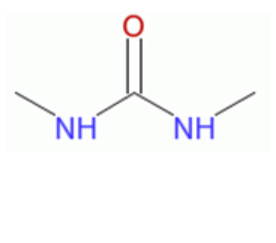
Chemically, dimethylurea is a derivative of urea in which two hydrogen atoms are replaced by methyl groups. This modification significantly alters its solubility, stability, and reactivity. As a result, dimethylurea shows improved compatibility with organic solvents and maintains strong stability even at moderate reaction temperatures. These characteristics allow it to act as a versatile intermediate in multiple synthetic routes where precision and reproducibility are crucial.
One of the most striking features of dimethylurea is its dual nature—stable enough to be stored and transported safely, yet reactive enough to participate in selective methylation or condensation reactions. This balance makes it ideal for controlled synthesis processes, especially in pharmaceutical and fine chemical industries. Its use often leads to higher yields, fewer by-products, and greater cost-effectiveness compared with less refined intermediates.
Today, dimethylurea is not just a chemical; it’s a foundation for innovation. Our company provides industrial-grade and laboratory-grade dimethylurea with strict quality assurance, low impurity content, and customizable purity levels. Every batch undergoes rigorous testing to guarantee consistent performance, so that your production line never faces uncertainty.
Whether you are synthesizing active ingredients, enhancing fiber properties, or stabilizing pigments, dimethylurea offers the precise performance that modern industries rely on.
The Role of 1,3-dimethylurea in Caffeine and Metformin Synthesis
Every cup of coffee and every tablet of metformin has a chemical story behind it—and 1,3-dimethylurea is one of the key characters in that story. In both caffeine and metformin production, this compound serves as a crucial intermediate that ensures the efficiency and purity of the final product.
In caffeine synthesis, 1,3-dimethylurea acts as a methylated urea derivative that facilitates the formation of the caffeine molecule’s xanthine structure. Its balanced reactivity allows the reaction to proceed smoothly, avoiding overreaction or unwanted by-products. Because it remains stable under typical synthesis conditions, it provides consistent results, making industrial-scale production not only possible but cost-effective.
For metformin synthesis, 1,3-dimethylurea plays a different but equally vital role. It helps introduce the dimethylamino functionality that defines the drug’s antidiabetic properties. Thanks to its high solubility and chemical compatibility, 1,3-dimethylurea integrates seamlessly into stepwise reactions without complicating purification processes. The outcome is higher yield, cleaner reaction profiles, and a lower cost per kilogram of active ingredient.
Our 1,3-dimethylurea is produced under controlled conditions using advanced purification systems that guarantee a purity level exceeding 99%. This ensures that pharmaceutical companies can rely on it not only for pilot trials but also for consistent, large-scale production. Its performance has been validated by multiple international clients, who have found it to be stable, safe, and reliable.
By choosing 1,3-dimethylurea, you invest in smoother reactions, cleaner results, and greater production efficiency. It is a small molecule that makes a big difference.
The Strength of 3,3,4-dichlorophenyl 1,1-dimethylurea in Pigment and Plastic Applications
In the world of pigments and plastics, long-lasting color, mechanical strength, and resistance to degradation are the top priorities. This is where 3,3,4-dichlorophenyl 1,1-dimethylurea steps in as a high-performance intermediate and stabilizing additive.
This compound’s aromatic ring, substituted with chlorine atoms, grants it exceptional thermal and oxidative stability. When incorporated into pigment formulations, 3,3,4-dichlorophenyl 1,1-dimethylurea improves color fastness, prevents fading, and enhances resistance to UV exposure. Pigments containing this additive maintain their vivid hues longer, even under harsh sunlight or high-temperature conditions.
In plastics, 3,3,4-dichlorophenyl 1,1-dimethylurea acts as an antioxidant and processing stabilizer. It prevents polymer degradation during extrusion, molding, or storage, extending the product’s service life. From high-end automotive plastics to consumer goods, it ensures that the material retains its appearance, toughness, and integrity over time.
Manufacturers appreciate 3,3,4-dichlorophenyl 1,1-dimethylurea for its excellent compatibility with different resin systems and its ability to function effectively in both pigment and polymer environments. Our production process employs precision synthesis and purification technologies that minimize residual chlorine and moisture, providing a highly stable, easy-to-handle product that integrates smoothly into your formulation.
For companies seeking to improve product durability, color retention, or environmental resistance, 3,3,4-dichlorophenyl 1,1-dimethylurea offers a cost-effective path toward higher performance and customer satisfaction.
The Industrial Value of Urea,N,N′-dimethyl in Fiber Finishing
In textile and fiber treatment industries, achieving the perfect balance between softness, strength, and functionality is both an art and a science. Urea,N,N′-dimethyl has become one of the most trusted chemical agents for achieving that balance.
This compound’s unique structure enables it to participate in crosslinking and surface modification reactions. When applied to fabrics, Urea,N,N′-dimethyl can improve wrinkle resistance, enhance tensile strength, and modify hydrophilicity or antistatic properties. It serves as an active component in fiber finishing agents that make textiles more comfortable to wear, more durable in use, and more resistant to washing or environmental damage.
Another major advantage of Urea,N,N′-dimethyl lies in its mild reaction profile. It can react efficiently under relatively low temperatures, minimizing fabric damage and energy consumption. This makes it ideal for sustainable textile processing lines seeking to reduce environmental impact without sacrificing quality.
Our Urea,N,N′-dimethyl products are available in multiple grades suitable for cotton, polyester, nylon, acrylic, and blended fabrics. Each formulation is designed to meet specific performance goals, from enhanced softness and brightness to improved dimensional stability.
Many textile manufacturers also appreciate its versatility—it can be used as a crosslinking agent, a softening co-reactant, or a finishing additive. Its compatibility with modern fiber treatment systems ensures consistent performance, low emissions, and high efficiency. With our technical team’s guidance, you can easily integrate Urea,N,N′-dimethyl into your finishing formulations and experience visible improvements in product quality.
The Future of dimethylurea: Innovation, Reliability, and Sustainability
As global industries move toward greener and more efficient production methods, compounds like dimethylurea are gaining renewed attention. Their balance of safety, reactivity, and stability positions them as ideal materials for modern chemical manufacturing.
I-Dimethylurea and its derivatives—1,3-dimethylurea, 3,3,4-dichlorophenyl 1,1-dimethylurea, and Urea,N,N′-dimethyl—represent the intersection of chemistry and practicality. They are essential in creating everyday products that improve lives: the caffeine that fuels our mornings, the metformin that supports global health, the fibers in our clothes, and the pigments and plastics that add color and durability to our world.
From an industrial perspective, these compounds provide significant benefits. Their high purity minimizes impurities in final products, their consistent reactivity reduces batch-to-batch variability, and their versatility allows easy adaptation across multiple industries. By using our dimethylurea products, manufacturers can increase efficiency, lower waste, and improve the environmental footprint of their processes.
Our commitment goes beyond supplying chemicals—we partner with our customers to optimize formulations, enhance production performance, and ensure safety and compliance. We provide technical support, detailed specifications, and scalable packaging options to meet laboratory, pilot, or full production needs.
If you are seeking high-quality dimethylurea or its derivatives for your chemical synthesis, fiber treatment, or additive formulation, contact our team today. Visit our official website to explore our product range, request a quote, or consult with a technical expert. Experience how the right raw material can redefine your results—start your journey with dimethylurea now.
I-Dimethylurea FAQs
What is dimethylurea, and why is it important?
I-Dimethylurea is an organic compound derived from urea with two methyl groups attached. It serves as a crucial intermediate in chemical synthesis, used in pharmaceuticals, textiles, pigments, and plastics. Its importance comes from its excellent chemical stability, solubility, and reactivity balance, making it useful in both laboratory and industrial-scale operations.
How is 1,3-dimethylurea used in pharmaceuticals like caffeine and metformin?
1,3-dimethylurea is a key intermediate in producing caffeine and metformin. In caffeine synthesis, it helps form the methylated xanthine ring structure. In metformin synthesis, it introduces the dimethylamino functionality that defines the drug’s properties. Its high purity and predictable reactivity make it ideal for pharmaceutical manufacturing.
What makes 3,3,4-dichlorophenyl 1,1-dimethylurea suitable for pigments and plastics?
This compound’s chlorinated aromatic structure gives it superior heat and UV resistance. It stabilizes pigments against fading and oxidation and protects plastics from thermal degradation during processing. Its compatibility with multiple resin and pigment systems makes it highly valuable for coatings, films, and molded products.
Why do textile manufacturers choose Urea,N,N′-dimethyl?
Urea,N,N′-dimethyl enhances fiber finishing by improving softness, strength, and wrinkle resistance. It reacts gently under mild conditions, reducing energy use and fabric damage. It’s widely used in finishing agents for cotton, polyester, and blended fabrics, helping to achieve smoother textures and longer-lasting performance.
Where can I buy high-quality dimethylurea and its derivatives?
You can purchase premium-grade dimethylurea, 1,3-dimethylurea, 3,3,4-dichlorophenyl 1,1-dimethylurea, and Urea,N,N′-dimethyl directly from our company website. We offer multiple purity levels and packaging options to fit your research or industrial requirements. Visit our site today to learn more, request technical data sheets, or place an order. Our team is ready to help you select the right product for your needs and ensure smooth delivery worldwide.